Product Description
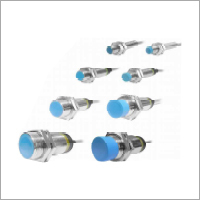
The specialization of our company lies in making STD And Non STD Sensors. It is the unmatched quality of our sensors and their reasonable rates because of which we have attained the loyalty of customers. From the designing to delivery of these sensors, we have specialized professionals who help us to finish every task with utmost perfection. The entire array of STD And Non STD Sensors are passed from strict quality checks to verify they are defect-free and worth selling.
Robust Performance in Industrial EnvironmentsOur sensors are designed to withstand harsh industrial conditions, boasting vibration resistance from 10 to 55 Hz and shock resistance up to 500 m/s. The IP67 rating ensures complete protection against dust and water, making them suitable for demanding automation, machinery, and material handling applications.
Versatile Mounting and Connectivity OptionsOffering both threaded and panel mounting styles, and available in cylindrical or rectangular designs, these sensors adapt seamlessly to various installations. The 2m standard cable or connector options make wiring straightforward, complemented by easy LED status indicators for visual feedback.
Precision Sensing with Advanced ProtectionInductive, photoelectric, and proximity sensing options are available, each delivering high accuracy (0.5% F.S.) and rapid response (3ms). Integrated features such as short circuit and reverse polarity protection ensure reliability and safety in any industrial automation setup.
FAQs of STD And Non STD Sensors:
Q: How do these sensors improve industrial automation processes?
A: These sensors provide precise and reliable object detection, enabling faster and more accurate control of automated machinery, material handling systems, and safety circuits. Their quick response time and high resolution allow for efficient, automated workflow and enhanced process safety.
Q: What are the available sensor types and how can I select the right one for my application?
A: We offer inductive, photoelectric, and proximity sensors. Inductive sensors are ideal for detecting metal objects, while photoelectric sensors are suitable for general-purpose object detection, including non-metallic items. Proximity sensors work well where quick, contactless detection is needed. Select based on your material and detection range requirements.
Q: When should I use the adjustable sensitivity feature?
A: Adjustable sensitivity allows customization for varying target sizes or materials, ensuring accurate detection even under diverse operational conditions. Use this feature when objects to be sensed vary in shape, size, or distance, to maintain reliable detection without false triggering.
Q: Where can these sensors be installed, considering their mounting types?
A: These sensors can be mounted either through threaded mounting for secure, adjustable positioning or through panel mounting for flush, unobtrusive installations. This flexibility makes them suitable for machinery frames, control panels, conveyor lines, and automation cells.
Q: What is the process for connecting these sensors to a control system?
A: Sensors come with a 2m standard cable or connector for easy integration. They support 2/3 wire connections and offer PNP, NPN, NO, and NC output signal adaptability. Follow the wiring diagram provided in the manual for correct interface with your control system, ensuring power and signal lines are appropriately connected.
Q: How does the protection against short circuit and reverse polarity benefit users?
A: These built-in protections prevent damage to the sensor and the control system in case of incorrect wiring or accidental short circuits, thereby extending product life, minimizing downtime, and safeguarding the overall automation infrastructure.



 Send Inquiry
 Send Inquiry
 Send SMS
 Call Me Free
